Monday, October 11, 2010

RESEARCH ASSIGNMENT: UNDERSTANDING THE FLOWGRAPH EDITOR


I am not a programmer, this is why I found the Sandbox2 Flowgraph editor a little hard to get my head around. The procedural programming thinking required to use the Flowgraph editor can be a little difficult to understand at first. Having to understand the Flowgraph editor itself at the same time didn't simplify the learning process for me. In fact, I'm still having trouble understanding the basics (like when is it best to assign a flowgraph to a entity or just create a general flowgraph!?). Something that has come to my attention is that no reasonable video tutorial exists to  cover the basics of the flowgraph editor. Although information regarding the topic is available on the internet, it is in various sources and not sometimes a bit difficult to follow.

Therefore for the Research Assignment I intend to cover the basics of the flowgraph editor, how to best configure the flowgraph editor, what it can be used for and explain some basic nodes and how to use them to create useful flowgraphs. I will then explain the best sources to learn more about the flowgraph editor.

Tutorial Topics:
a) Features of the Flowgraph editor
b) How to create a Flowgraph
c) Basic Nodes
d) Understanding the logic behind flowgraphs


Research Result
http://doc.crymod.com/SandboxManual/frames.html?frmname=topic&frmfile=index.html
http://doc.crymod.com/SandboxManual/frames.html?frmname=topic&frmfile=FlowgraphWindow.html
http://doc.crymod.com/SandboxManual/frames.html?frmname=topic&frmfile=FlowgraphNodeComposition.html

http://wiki.crymod.com/index.php/Flowgraph_Guide
http://wiki.crymod.com/index.php/Creating_a_Flowgraph
http://wiki.crymod.com/index.php/Flowgraph_Tips_and_Tricks
http://wiki.crymod.com/index.php/Sample_Flowgraph
http://wiki.crymod.com/index.php/Flowgraph_Nodes

http://www.youtube.com/watch?v=m52WBBNwx9U

Sunday, October 10, 2010

EXP2: PREFAB ARCHITECTURE

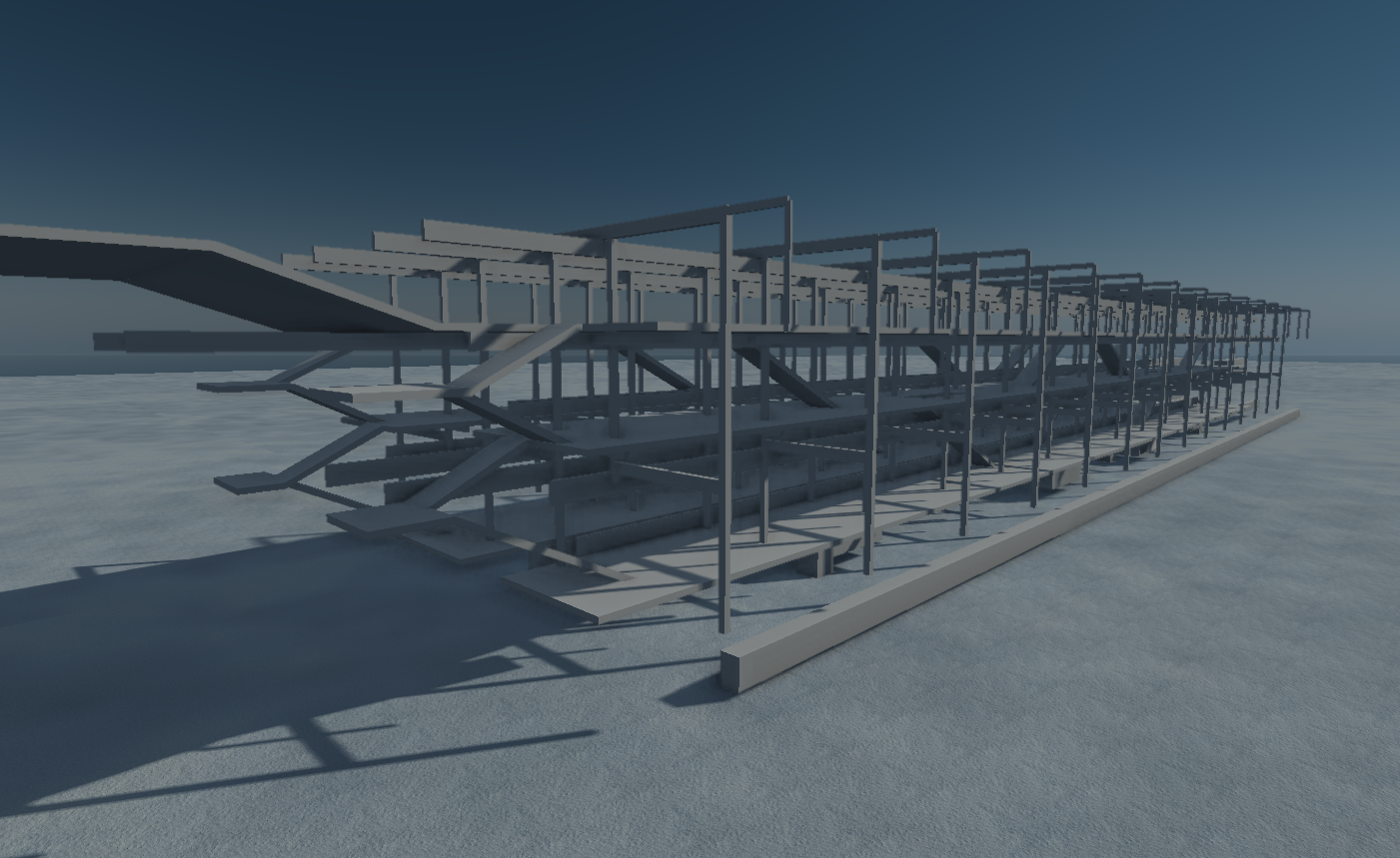
In my experiment I will be spawning architectural space that somehow relates to how the space is being used. Although purely a study of how space is utilized and not a proposition to construct the spawned forms, I still think it is necessary to have an understanding of how prefab architecture works. The spawned architecture will purely reflect data but still needs to function to a degree as real architecture.

Friday, October 8, 2010

EXP2: A POROSITY LENS

Architecture can be considered to be the art of creating space. All spaces are delegated specific rolls which are defined by how they are used. It can then be derived that architecture provides a desired service. The nature of this service is defined by the architecture's users, they essentially construct the spaces. It is then architectures responsibility to deal with its users in a manner that will facilitate the reconstruction of spaces within it. Understanding the desires of users (their behaviour, needs, & wants) through data collection and interpretation will allow for the evaluation of an architecture's spaces. Knowing how long users spend in a particular space, how they circulate within an architecture (and between spaces), how they interact with others, and whether it fulfills their criteria can potentially influence how a design is considered; greatly simplifying the designers role when envisioning how a building should be used and making the building more effective/efficient in fulfilling its roll.

My intention then for Experiment 2 is to perform an initial investigation into how people interact within spaces and challenge some basic desires people require from a space. I then intend move on and use the notion of architecture being derived from how it is used to create an architecture that directly reflects how a user is using a space. I will achieve this by spawning a prefab architecture that directly reflects how long the user had spent in that space; the bigger the spawned architecture, the more time was spent in the space within it. I aim to reflect on how certain spaces are used differently by having different type of architecture spawn when different actions are performed. The premise is to demonstrate the potential of visualising the information that can be derived from performing such an investigation and its ability to assess the effectiveness of a building in serving its purpose.


REFERENCES

"[Cederic] Price believed that architecture was a service, that it should enable its users to recondition it in relation to their needs and criteria. He also believed that the delaying of spatial decisions in an ever-changing world was vitally important." Neil Spiller, Digital Architecture Now- A Global Survey of Emerging Talent, p. 10
http://designmuseum.org/design/cedric-price

Conversation Theory:- "[Gordon] Pask believed that out knowledge of the world is conditioned by the conversation we have with it and with others. In relation to architecture, the process and re-evaluation that a designer adopts is a second-order cybernetics conversation. Once we understand the process we instigate when designing, it follows that we should then ask whether it is possible to create an architecture machine that might then help us to design" Neil Spiller, Digital Architecture Now- A Global Survey of Emerging Talent, p. 11
http://en.wikipedia.org/wiki/Gordon_Pask
http://en.wikipedia.org/wiki/Conversation_Theory

Thursday, October 7, 2010

EXP2: DEVELOPING SCENARIO EXPERIMENTS


Confined Space – Interactions with people in a confined space. IDEA: People will move away when you stand too long next to them

Flowing through Space – A ‘river’ of people is challenged and the invasion of peoples personal space met with disruption of the flow

Funnelled Space – the funnelling of a group of people through a constraint and how this compromises personal space: personal space indicators

Un-funnelled Space - a ‘concentrated stream of people are observe to dissolve into a unconstrained space and the effect on peoples invaded personal space.

Un-funnelled Space:  Increasing division through devices- the implementation of “V” dividers to separate the crowd more accurately.

The desire of interaction:  the player is placed in a studio of people and the desire for interaction is challenged as everyone who is approached faces away from the player

The desire of interaction is contrasted against people directly interacting with each other as a direct cause of particular architecture device. 

Understanding through perspective: Challenge how the viewer perceives an environment by varying between various depth of views. 

EXP2: RELEVANCE TO CYBERNETICS

A developing understanding of Cybernetics in Architecture, key concepts and ideas. 

"[Cederic] Price believed that architecture was a service, that it should enable its users to recondition it in relation to their needs and criteria. He also believed that the delaying of spatial decisions in an ever-changing world was vitally important." Neil Spiller, Digital Architecture Now- A Global Survey of Emerging Talent, p. 10
http://en.wikipedia.org/wiki/Cedric_Price
http://designmuseum.org/design/cedric-price

Conversation Theory:- "[Gordon] Pask believed that out knowledge of the world is conditioned by the conversation we have with it and with others. In relation to architecture, the process and re-evaluation that a designer adopts is a second-order cybernetics conversation. Once we understand the process we instigate when designing, it follows that we should then ask whether it is possible to create an architecture machine that might then help us to design" Neil Spiller, Digital Architecture Now- A Global Survey of Emerging Talent, p. 11
http://en.wikipedia.org/wiki/Gordon_Pask
http://en.wikipedia.org/wiki/Conversation_Theory


Cybernetics in architecture also relates to other notions, including: the creation of evolutionary architecture that achieves in the built environment the symbiotic behaviour and metabolic balance that are characteristic of the natural environment, the construction of building elements that have the ability to respond to data streams in real time, the utilization of algorithms to generate architecture- in a sense 'breding' the forms achieved. 

"All manner of data can be collected, transmitted and relocated, and this data can be used to create animated surfaces withinstructures while also forming the fundamental building blocks of buildings. Therefore the old typologies of buildingshave become corrupt and blurred. Without the rapid evolution of the computer and its ways of processing and keeping check on large amounts of data, none of there new projects would be possible." Neil Spiller, Digital Architecture Now- A Global Survey of Emerging Talent, p. 13

Wednesday, October 6, 2010

Tuesday, September 28, 2010

EXP2: MOVEMENT THROUGH SPACE VERSUS TIME SPENT IN PLACE


"Static No.12 (seek stillness in movement), which takes as its subject the slow and graceful movements a man he filmed randomly taking tai chi exercise in a Shanghai park. Crooks’ study of this gentle martial art is a meditation on the movements themselves, and the sequence of tai chi forms appears and disappears in a molten assemblage of attenuated body parts. The body’s movement spreads horizontally across the frame and the viewer is astonishingly privy to the entire span of the practitioner’s compelling routine, all at once, compressed into single moments and expanded across time." http://www.bos17.com/biennale/artist/25


http://danielcrooks.com/

Monday, September 27, 2010

WEE9: SKETCH

a


b


c


d


e

EXP 2: THE 3D PICTURE

As part of my developing brief I am considering making exp2 completely 3D. This would not be a meaningless exercise as my intent is to further comment on how peoples interactions are influenced by architecture. I want the viewer to be conscious that what I am commenting on directly relates to them. Using a 3D shader within Crysis to emulate a 3D environment will hopefully allow me separate certain elements from others and highlight element that are closer than others.

With help from Russel I have been able to successfully install Xzero's zStereoscopic 3D (Red & Cyan) Shader and I've quickly outlined how I did this below:

1. Download the Shader: First you need to download the type of Stereoscopic Shader you wish to use. You have a choice between Red/Cyan, Amber/Blue, and Green/Magenta; which one you choose really depends on which type of 3D glasses you have laying around the house, check out the wikipedia page here. Like I said I used the Red/Cyan shader which I've reuploaded unzipped to filefront as the original .pak file.


You can also download it and the other shaders from Xzero's original upload which I've provided direct links to below:

Xzero's Red/Cyan Original Upload: http://crymod.com/attachment.php?attachmentid=71889

Xzero's Amber/Blue Original Upload: http://crymod.com/attachment.php?attachmentid=71890

Xzero's Green/Magenta Original Upload: http://crymod.com/attachment.php?attachmentid=71891


2. After downloading your desired shader you need to get the .pak file (which you will need to unzip if you downloaded Xzero's oringinal upload) and place it in your Game directory (C:\Program Files (x86)\Electronic Arts\Crytek\Crysis Wars\Game).


3. Once the ZStereoscopic3D.pak shader is in the Game Folder you need to load up your level in the sandbox editor and create a  Flow Graph by clicking View > Open View Panel > Flow Graph. Once the Flow Graph Editor is open click File > New

4. Then create the following two nodes by right clicking on the gray space

a)  Misc > Start
b)  Image > FilterGrain

5. Change the FilterGrain settings to Enabled and set an Amount to 13 (although Xzero suggests that anything between 5 & 10 works well). Once you have done this create the following Flow Graph: 


6. Your done! All you need to do now is get into the game and check it out, don't forget to put on your glasses! I'll try to upload a video in the next few days but here are some still captures for now: